

CXII Hans Wechter the Younger - Emanuel Wehrbrun
The four artists in this volume are of completely different significance. Hans Wechter the Younger, working in Erfurt and Wolfenbüttel, whose relation to his elder namesake in Nuremberg is not clear, mainly produced the copper illustrations for two book publications with unusual iconography. One of these describes in detail the torments that await sinners in hell, while the other tells a fantasy story about a noble couple. Two single-sheet prints show that Wechter was also a talented ornament designer.
Hans Wechtlin is the most important artist in this volume with almost 100 woodcuts. Both his single sheet prints and his book illustrations are important contributions to the history of printmaking. He was one of the first artists to discover the fascinating effects of superimposing impressions of several woodblocks in different colours, creating an effect not unlike pen and wash drawings. Whether he was the inventor of this technique, which later became known as chiaroscuro printing, remains open to question, but he was among the first artists to explore it. His twelve ambitious chiaroscuro prints are included here alongside his other single sheets, some of which are exceptionally large. But there are also a number of title-pages in which the technique was used to good effect. In the early years of the sixteenth century, Wechtlin supplied the important publishing house of Johann Knobloch in his hometown of Strasbourg with a large number of woodcuts of outstanding quality depicting the Life of the Virgin and the Passion of Christ. The publisher illustrated two books with the prints, unashamedly using quite a few of them in both publications. Wechtlin also worked for other publishers in Strasbourg and other places.
Only two small woodcuts are known to exist by the Dresden court painter Zacharias Wehme, a pupil of Lucas Cranach the Younger.
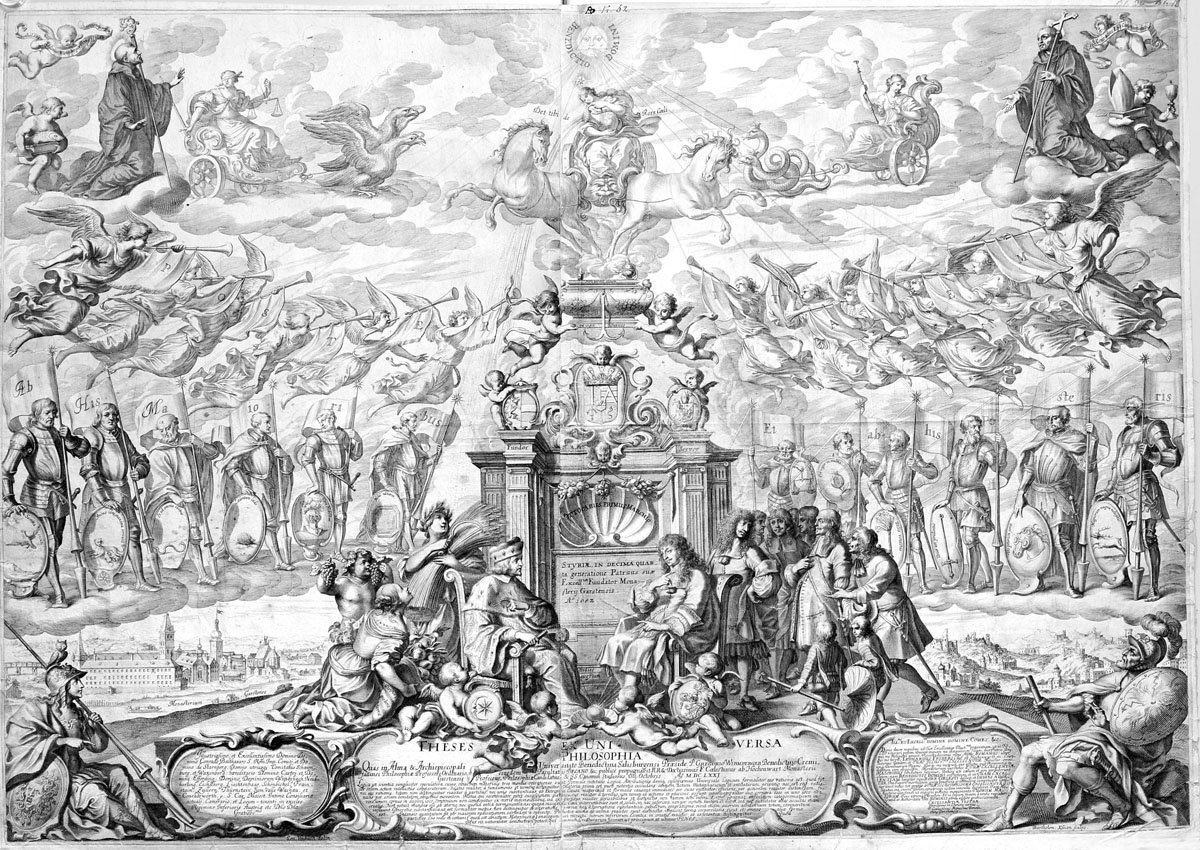
The 58 copper prints from the seventeenth century by Emanuel Wehrbrun consist mainly of frontispieces and some book illustrations for publishers in Cologne, where he may have been associated to the collegiate church of St. Gereon as a lay brother.
Published in 2026
Compiler: Dieter Beaujean
Editor: Gero Seelig
ISBN: 978-94-835763-3-6
260 pp.